Sometimes, educators understandably lower expectations when a student is struggling. It can feel compassionate. If the work is too difficult, perhaps making it easier will help the student experience success.
But there is a difference between lowering the expectation and changing the path to reach it.
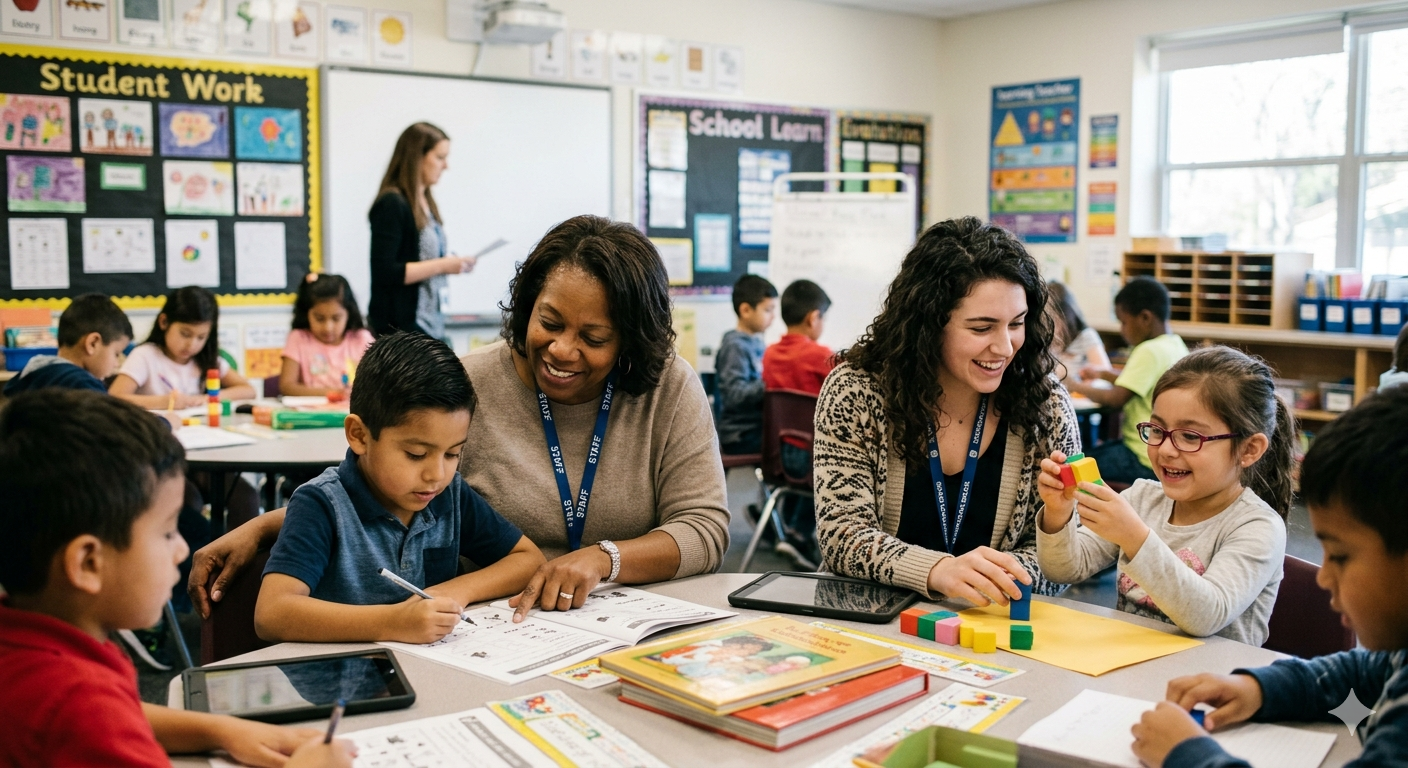
A student who struggles with reading may need audio support, explicit vocabulary instruction, additional practice, or more time. A student who struggles with math may need manipulatives, worked examples, or the opportunity to solve a problem in smaller steps.
The goal is not necessarily to make the destination easier.
The goal is to provide the support students need to reach the destination.
High expectations sound like:
“I know this is challenging. We aren’t giving up. Let’s figure out what you need to be successful.”
That message tells students that difficulty is not evidence that they are incapable.
What High Expectations Look Like in the Classroom
High expectations are built into everyday interactions.
They look like:
- Teaching students how to meet expectations rather than assuming they already know how.
- Giving students meaningful opportunities to revise and improve.
- Providing specific feedback instead of simply saying “good job” or “wrong.”
- Breaking challenging tasks into manageable steps without removing the rigor.
- Modeling what quality work looks like.
- Giving students time to think before jumping in with an answer.
- Celebrating progress while continuing to encourage growth.
- Separating a student’s behavior or current performance from their potential.
- Refusing to let one difficult day become a permanent label.
- Communicating confidence even when students are struggling to find confidence in themselves.
And perhaps most importantly, high expectations are communicated through consistency.
Students notice when adults believe certain students are “the smart ones,” when some students are allowed to opt out of challenging work, or when expectations change based on behavior, background, or ability.
Every student deserves to hear some version of:
“I believe you can do this. Now let’s work together to get you there.”
What to Say: Elementary School
Elementary students are still developing their academic identities. They are learning not only what they can do, but also what they believe about themselves as learners.
The language adults use can become part of that internal voice.
| Instead of… | Try… |
| “This is too hard for you.” | “This is challenging, but I know you can learn it. Let’s take it one step at a time.” |
| “You already know this.” | “Let’s see what you remember, and I’ll help you with the parts that feel tricky.” |
| “You’re not paying attention.” | “I need your eyes and brain back with us. Come on—you don’t want to miss this part.” |
| “You made a lot of mistakes.” | “I see a few places where we can grow. Let’s find one and work on it together.” |
Other phrases that build both confidence and accountability:
- “I won’t do it for you, but I will help you learn how to do it.”
- “Show me what you know so far.”
- “Mistakes are clues. Let’s see what this one is telling us.”
- “You don’t have to know it yet. That’s why we’re learning it.”
- “Let’s try a different strategy.”
- “I noticed you kept going even when it was hard. That’s what strong learners do.”
What to Say: Middle School
Middle school students are navigating a complicated combination of independence, insecurity, social pressure, and rapidly changing academic expectations.
They often need adults to communicate two things at the same time:
“You are responsible for your choices.”
and
“You don’t have to figure everything out alone.”
| Instead of… | Try… |
| “You should know how to do this by now.” | “You’re ready for more independence, and part of becoming independent is knowing when to ask for help.” |
| “You’re not trying.” | “I know you can do better than what I’m seeing right now. What’s getting in the way?” |
| “That’s not good enough.” | “You’re capable of stronger work. Let’s look at what would move this from where it is now to where it needs to be.” |
| “Stop making excuses.” | “I hear what’s making this difficult. Now let’s focus on what you can control.” |
Other phrases that can be powerful with middle school students:
- “I’m not lowering the expectation. I’m helping you reach it.”
- “You don’t have to like the assignment, but you do need to engage with the learning.”
- “Let’s separate what happened from what you do next.”
- “I know you’re capable. Help me understand what’s getting in your way.”
- “You have more ability than this moment is showing.”
- “Let’s work the problem instead of deciding you can’t solve it.”
That last one matters.
Middle school students can quickly turn “I can’t do this” into “I’m not good at this.”
A skilled educator helps students recognize that struggle is a moment—not an identity.
What to Say: High School
High school students need high expectations paired with preparation for life beyond the classroom.
That means helping students understand that expectations exist for a reason. The goal isn’t simply to get a grade. It is to develop skills, habits, confidence, responsibility, and independence.
| Instead of… | Try… |
| “You’re almost an adult. You should know better.” | “You’re getting closer to having complete responsibility for your choices. I’m going to hold you accountable while helping you build the skills to handle that responsibility.” |
| “You didn’t put in enough effort.” | “Let’s look honestly at your process. What did you do, what didn’t you do, and what needs to change next time?” |
| “This is unacceptable.” | “This doesn’t meet the standard yet. Let’s talk about what the standard is and what you need to do to reach it.” |
| “If you cared, you would do it.” | “Something is getting in the way of your follow-through. Let’s identify it and decide what you’re going to do differently.” |
Other phrases worth keeping in your teacher toolbox:
- “I’m going to hold you to the same high standard because I believe you’re capable of meeting it.”
- “You don’t need to be perfect. You do need to be willing to grow.”
- “Your current grade is information, not a definition of your ability.”
- “Let’s talk about the next step instead of dwelling on the last mistake.”
- “I’m not here just to help you pass. I’m here to help you become capable.”
- “Eventually, I’ll step back. Right now, let’s make sure you have the tools to succeed when I do.”
Support Does Not Mean Rescuing
One of the most important distinctions educators can make is between supporting students and rescuing students.
Support might mean:
- Modeling the first example.
- Providing a checklist.
- Offering sentence starters.
- Checking for understanding.
- Providing targeted small-group instruction.
- Giving feedback.
- Allowing revision.
- Teaching organization and study skills.
- Helping students identify the next step.
Rescuing might mean:
- Doing the work for the student.
- Constantly reminding without teaching organizational skills.
- Removing every challenge.
- Accepting incomplete work indefinitely without addressing the underlying issue.
- Providing so much assistance that the student never develops independence.
The ultimate goal of support should be greater independence.
We want students to eventually say:
“I know what to do when I don’t know what to do.”
That is a powerful form of learning.
The Power of “Yet”
Sometimes one word can completely change the conversation.
Yet.
“I can’t do this.”
“You can’t do it yet.”
“I don’t understand.”
“You don’t understand it yet.”
“I’m not good at writing.”
“You’re still developing as a writer.”
“I’m terrible at math.”
“Math is challenging for you right now. Let’s figure out what you need.”
The word yet isn’t magic. Students still need instruction, practice, feedback, and support.
But it changes the message from finality to possibility.
High Expectations + High Support
The most effective classroom message may be surprisingly simple:
“I believe you can.”
Followed by:
“Here is what we’re going to do to help you get there.”
That combination matters.
High expectations without support can leave students feeling defeated.
Support without high expectations can unintentionally communicate that we don’t believe students are capable of more.
But when educators combine belief, accountability, instruction, patience, and support, something powerful happens.
Students begin to understand that struggling does not mean stopping.
A difficult assignment does not mean they cannot learn.
A mistake does not mean they have failed.
And a disappointing grade does not determine what they are capable of becoming.
Our job is not to make every challenge disappear.
Our job is to make sure students know they are capable of facing the challenge—and that we will teach, encourage, and support them along the way.
Because sometimes the most important thing a teacher can give a student isn’t an easier path.
It’s the confidence to believe:
“I can do hard things.”
Submitted by: TN Educator Collective