The first few weeks of summer break are critical for a teacher’s recovery. To successfully decompress, educators should strictly avoid schoolwork, transition from a rigid schedule to intuitive living, engage in hands-on hobbies like pottery, and plan an immersive restorative getaway in Tennessee’s diverse geographic regions.
The school year is a relentless marathon of bell schedules, lesson plans, grading, and emotional labor. When that final bell rings and the students go home for the summer, a teacher’s mind and body often don’t know how to immediately downshift. The initial weeks of summer are not just for sleeping in; they are for actively repairing a burnt-out nervous system. Here is an in-depth guide on how educators can relax, rest, and recharge, along with four out-of-the-box ideas and specific Tennessee destinations tailored for the ultimate teacher getaway.
The Importance of the “Summer Shock” Transition
During the academic year, your brain is conditioned to operate on a highly stimulated, multi-tasking frequency. You are managing twenty to thirty (or more) personalities, monitoring behaviors, adhering strictly to a clock, and making hundreds of micro-decisions every hour. When this abruptly stops, many teachers experience a “crash” or find themselves feeling restless, anxious, or even slightly depressed because the high-adrenaline environment is gone.
The first two weeks of summer should be treated as a period of active recovery, much like an athlete recovering from a major sporting event. Your primary goal is to lower your cortisol levels and give your brain permission to idle.
1. Implement a Strict “No Schoolwork” Quarantine
It is incredibly tempting to use the first week of summer to deep-clean your classroom, prep for next year, or attend voluntary professional development. However, to truly recharge, you must enforce a strict, mandatory quarantine from all things school-related. Do not laminate. Do not buy cute bins at Target. Do not read pedagogical books. Put your teacher bag in a closet, zip it shut, and do not open it for a time. Your brain needs to understand that the chapter is fully closed before you can effectively start a new one.
2. Transition from Schedule-Driven to Intuitive Living
Teaching is a profession governed by minutes. You eat lunch at a specific time, teach specific standards by specific dates, and even use the restroom when the schedule allows. When summer begins, ditch the alarm clock. Wake up when your body naturally tells you to. Eat when you are hungry. Read a book for pleasure, not because you need to review it for your curriculum. This return to intuitive living helps heal the psychological fatigue caused by constant time management.
3. Reconnect with the Physical World
Teachers spend most of their days in artificial lighting, staring at screens, whiteboards, or papers. To recharge, make a conscious effort to engage your physical senses. Feel the warmth of the sun, listen to the wind in the trees, smell the fresh air, and taste food slowly without rushing. Gardening, swimming, or even taking slow walks in nature can be incredibly grounding. This tactile, sensory engagement acts as a reset button for a tired mind.
Out-of-the-Box Ideas for Resting and Recharging
While reading a book on a beach or sleeping for twelve hours are classic vacation staples, true out-of-the-box resting requires engaging different parts of your brain and spirit. Here are four unique ways to relax during the first weeks of summer:
1. Try Clay Throwing at a Local Pottery Studio
Teaching requires a massive amount of mental energy and output, but very little physical creation that you get to keep and admire. Enrolling in a short-term pottery class or wheel-throwing workshop is the perfect antidote. Working with clay demands your full, undivided attention. You cannot be worrying about yesterday’s lesson or tomorrow’s to-do list when your hands are covered in wet clay and you are centering a mound on the wheel. It is inherently therapeutic, messy, and forces you to focus entirely on the present moment. Furthermore, you get to walk away with a tangible, beautiful piece of art that you created, which is a highly satisfying feeling for an educator.
2. Complete an Analog Digital Detox (The Week-Long Tech Purge)
Educators are increasingly tied to technology, using smartboards, online grading portals, and digital communication platforms daily. Challenge yourself to a one-week digital detox. Put your smartphone in a drawer and use an old-school alarm clock and a regular camera for a week. Tell your loved ones how to reach you via a landline or specific pre-planned check-ins. You will be amazed at how quickly your attention span recovers and how much quieter your mind becomes when you are not receiving constant notifications, emails, and alerts.
3. Participate in a “Silent Retreat” or a Micro-Cabin Escape
Teachers are constantly talking, redirecting, explaining, and communicating. A highly effective, though slightly unconventional, way to recharge is to intentionally remove your voice and the noise of others from your environment. Book a night or two in a remote, tiny cabin or a designated silent retreat center. Without the pressure to converse, explain, or entertain, you can sink into profound silence. Listen to the sounds of nature, write in a journal, meditate, and simply enjoy the luxury of having absolutely no one ask you a question or demand your attention.
4. The “Brainless” Job Experience for One Day
Sometimes the best way to appreciate your downtime is to temporarily trade the mental gymnastics of teaching for a simple, repetitive, or physical task. Volunteer at an animal shelter walking dogs, help sort items at a local food bank, or spend a day doing volunteer gardening at a botanical arboretum. Engaging in a task where the instructions are clear, there are no grades to input, and there are no behavioral management plans to implement can be surprisingly freeing. It allows you to contribute to your community while giving your brain a complete vacation from cognitive heavy lifting.
The Ultimate Tennessee Recharging Destinations
Tennessee is a state of incredible geographic and cultural diversity. From the rugged peaks of the east to the rolling hills of the middle and the deep river delta landscapes of the west, there are incredible spots for a teacher to retreat. Here are three highly recommended places to recharge, spanning the three grand divisions of the state.
1. East Tennessee: Great Smoky Mountains Institute at Tremont (Townsend)
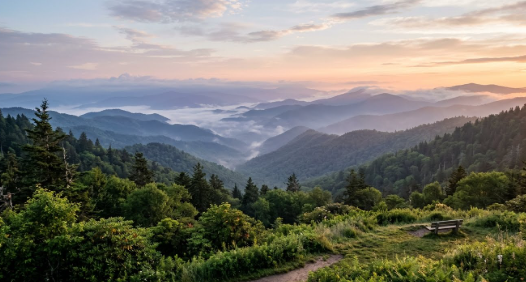
While teachers often associate the Great Smoky Mountains with busy tourist hubs like Pigeon Forge or Gatlinburg, educators looking for a purposeful and restorative escape should look toward the Great Smoky Mountains Institute at Tremont located deep inside the national park. Tremont frequently hosts “Teacher Escape Weekends” and immersive educator workshops. Surrounded by lush old-growth forests, rushing mountain streams, and fresh, crisp air, this is the perfect opportunity to unplug, learn about nature alongside fellow educators, and immerse yourself in the quiet beauty of the Smokies without the frantic pace of the typical tourist traps.
2. Middle Tennessee: The Retreat Spaces in the South Cumberland Plateau
For a teacher seeking peace, solitude, and connection with nature in Middle Tennessee, the South Cumberland Plateau region—specifically near towns like Sewanee, Tracy City, and Beersheba Springs—is a hidden gem. This area is known for its dramatic bluffs, deep coves, and peaceful wooded hideaways, such as those found on Airbnb near hiking spots like Foster Falls. Instead of staying in a bustling city, rent a secluded cabin in this region. Spend your mornings reading on a quiet porch, your afternoons hiking to hidden waterfalls, and your evenings stargazing in the dark night sky. The slower pace of life in this part of the plateau acts as a natural balm for an overstimulated mind.
3. West Tennessee: Reelfoot Lake State Park
For an entirely different but profoundly peaceful experience, West Tennessee offers Reelfoot Lake State Park, located in the northwest corner of the state. Reelfoot Lake is a unique, naturally formed lake created by the New Madrid earthquakes of the early 1800s. It is filled with submerged cypress trees and is a haven for eagles, herons, and incredible aquatic wildlife. The atmosphere here is quiet, misty, and distinctly laid-back. Teachers can rent a cozy cabin, take a peaceful boat ride across the tranquil waters, fish, or simply enjoy the striking, quiet beauty of the cypress swamps. It is a world away from the classroom and offers a completely unique landscape to help you clear your mind and reset.
Conclusion
The transition from a busy school year to summer break is a vital time for educators. By actively putting away all schoolwork, allowing your mind and body to transition from rigid schedules to intuitive living, and engaging in out-of-the-box activities like pottery or a silent retreat, you can successfully lower your cortisol levels and heal burnout. Combining this restorative mindset with a well-planned trip to a peaceful Tennessee destination—whether it’s the quiet woods of the Smokies in East Tennessee, the bluffs of the Cumberland Plateau, or the serene, cypress-filled waters of Reelfoot Lake in the west—provides the perfect foundation for a truly rejuvenating summer. You pour everything you have into your students for ten months; these first few weeks of summer are the time to pour back into yourself.unity.
Submitted by: JR
Role: Former Teacher & Principal
JR is a former 5th grade teacher, middle school assistant principal, and elementary principal in Tennessee. She is passionate about seeing educators across Tennessee thrive and wants them to remember their work makes an impact far beyond what they may ever realize. She has also embraced her greatest gift -her son- and has stepped away from her formal role in education for a season to focus on raising him.