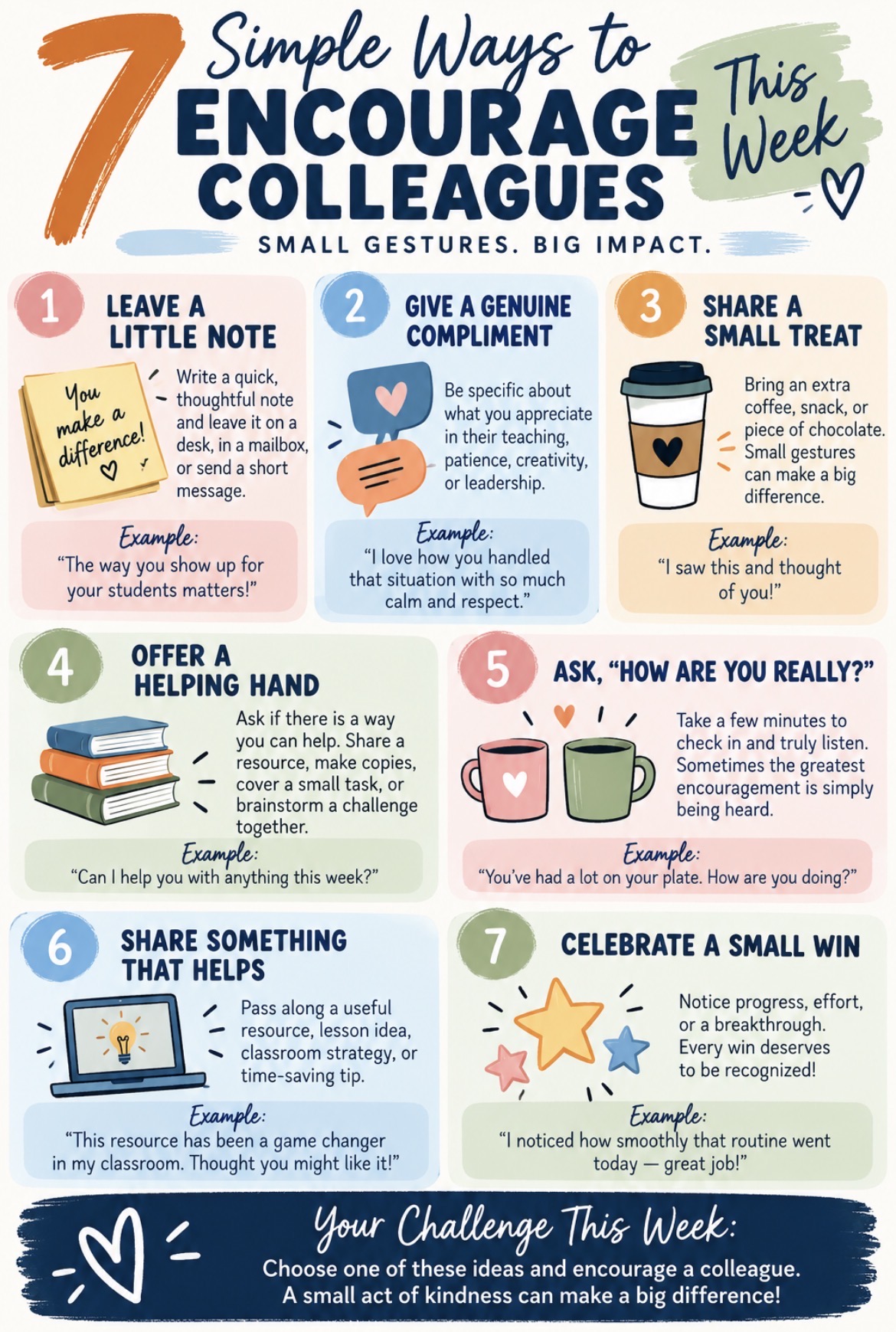
How educators can strengthen their colleagues, build a culture of support, and make school a better place to work, one small gesture at a time.
The Power of Encouraging the People Around Us
Teaching is a profession built on relationships. Educators spend their days encouraging students, celebrating progress, solving problems, and helping others believe in what is possible. Yet in the middle of lesson planning, meetings, student needs, paperwork, and ever-changing expectations, it can be easy to overlook the people standing right beside us.
Our colleagues need encouragement, too.
Every educator knows what it feels like to have a difficult day. Perhaps a lesson didn’t go as planned. A student is struggling despite every intervention. A parent conversation was challenging, or the to-do list seems to grow faster than it can be completed. Sometimes, the hardest part of the day is simply finding the energy to begin again tomorrow.
In those moments, a small act of kindness can make a meaningful difference.
A thoughtful note, a sincere compliment, an offer to help, or a few minutes of genuine conversation can remind a colleague that their work matters and that they aren’t alone.
That’s the idea behind our Quick Win of the Week: simple actions that educators can put into practice right away to make their schools stronger, more supportive places to work and learn.
Encouragement doesn’t require a committee, a budget, a special event, or hours of preparation. It starts with noticing the people around us and choosing to respond with kindness.
Why Colleague Encouragement Matters
School culture is shaped by everyday interactions. It develops through the way educators speak to one another, respond to challenges, recognize effort, and offer support when someone needs it.
When colleagues feel valued, they may be more willing to ask questions, share ideas, seek feedback, and work together to solve problems. A supportive environment can also help educators feel more connected to their teams and less isolated during challenging seasons.
Consider two different scenarios.
Scenario One: The Overwhelmed Teacher
A teacher has spent weeks trying to help a student who continues to struggle academically and behaviorally. The teacher feels discouraged and begins questioning whether anything is working.
A colleague notices the extra effort and says, “I’ve seen how much time you’ve invested in helping that student. I know it hasn’t been easy, but your consistency matters. Is there anything I can help you think through?”
That brief conversation doesn’t solve every problem. It does, however, acknowledge the teacher’s effort, offer support, and open the door to collaboration.
Scenario Two: The New Educator
A new teacher is learning school procedures, managing a classroom, communicating with families, and trying to keep up with daily responsibilities. Everything feels unfamiliar.
An experienced colleague checks in, shares a classroom management resource, and offers a few practical tips for organizing the week.
Instead of feeling like they must figure everything out alone, the new educator gains a trusted connection and a starting point.
In both scenarios, encouragement is more than saying something nice. It means noticing a need and taking a small, intentional step to meet it.
The good news? Every educator can do this.
Seven Simple Ways to Encourage a Colleague This Week
You don’t need to wait for Teacher Appreciation Week or a special occasion to recognize the people who make your school better. Try one of these seven quick wins this week.
1. Leave a Little Note
Written encouragement can have a lasting impact because it gives someone a tangible reminder that their work is noticed.
Leave a sticky note on a colleague’s desk, place a handwritten card in their mailbox, or send a short message before the school day begins.
Instead of writing a general “You’re doing great,” try something specific:
- “The patience you showed that student yesterday made a difference.”
- “I appreciate how willing you are to share your ideas with our team.”
- “You bring so much creativity to your classroom.”
- “Your students are fortunate to have someone who cares as much as you do.”
Put it into practice: Choose one colleague whose work you appreciate but may not acknowledge often. Write one sincere sentence and make sure they receive it before the end of the week.
2. Give a Genuine Compliment
Specific compliments help people understand which actions and qualities others value.
Perhaps a colleague handled a difficult situation calmly, created an engaging lesson, welcomed a new team member, or stayed patient during a stressful meeting.
Tell them what you noticed.
For example, you might say, “I appreciated the way you redirected that conversation without embarrassing the student. You handled it with so much respect.”
A meaningful compliment recognizes the action rather than offering vague praise. It shows that you were paying attention.
Put it into practice: Look for one opportunity each day to recognize something positive about a colleague’s work. Be sincere, specific, and timely.
3. Share a Small Treat
Sometimes, encouragement looks like a cup of coffee waiting on a desk or an extra snack offered during a busy afternoon.
These gestures don’t have to cost much. A piece of chocolate, a favorite tea bag, or an offer to pick up a drink can communicate thoughtfulness.
For example, if a teammate has a particularly demanding morning, you might say, “I’m grabbing coffee before our meeting. Can I bring you something?”
The real gift isn’t the coffee. It’s the reminder that someone thought about them.
Put it into practice: Offer a small treat or thoughtful gesture to someone who could use a little lift. Remember that a kind word or helping hand works just as well when money is tight.
4. Offer a Helping Hand
Encouragement becomes especially powerful when it makes someone’s day a little easier.
Ask a colleague what would be helpful instead of assuming you know what they need. Depending on your role and school procedures, you might share a resource, help organize materials, exchange lesson ideas, or assist with a manageable task.
Imagine a teacher preparing for a family conference while trying to finish classroom materials. A teammate offers to share an existing template or brainstorm a few talking points.
That small contribution may save time and reduce stress.
Put it into practice: Ask, “What’s one thing I could help you with this week?” Then follow through on a realistic offer.
5. Ask, “How Are You Really?”
Educators often answer “I’m fine” automatically, even when they’re carrying a heavy workload or facing a personal challenge.
A genuine check-in can create space for an honest conversation.
Try saying, “You’ve had a lot on your plate lately. How are you doing?” Then listen without immediately offering advice or comparing their experience to your own.
For example, a colleague might share that a classroom situation has left them frustrated. Rather than jumping straight into solutions, you could respond, “That sounds exhausting. Do you want to talk it through, or would it be helpful to brainstorm some options together?”
This approach respects what the other person needs in that moment.
Put it into practice: Make time for one intentional conversation this week. Put distractions aside and listen with the goal of understanding.
6. Share Something That Helps
Educators are constantly discovering tools, resources, routines, and strategies that make their work more manageable. Sharing those discoveries is a simple way to support colleagues.
You might pass along a formative assessment idea, a classroom organization strategy, a useful technology tool, or a resource for supporting student behavior.
For example, if you’ve found a simple way to organize weekly lesson materials, offer to share your template with your team. If a colleague is struggling with student transitions, share a routine that has worked in your classroom and invite them to adapt it.
The goal isn’t to suggest that one strategy works for every educator. It’s to make collaboration easier.
Put it into practice: Share one resource or strategy that has saved you time, helped a student, or made a challenging task more manageable.
7. Celebrate a Small Win
Educators spend so much time addressing problems that it can be easy to overlook progress.
Maybe a student who rarely participated finally volunteered an answer. A challenging classroom transition improved. A colleague completed a difficult project, tried a new instructional strategy, or navigated a tough conversation with professionalism.
Notice those moments.
You might say, “I know you’ve been working hard on that routine. I noticed how much smoother it went today.”
You could also create a simple team tradition in which colleagues share one small success during a weekly meeting.
Put it into practice: Ask a colleague, “What’s one win you had this week?” Celebrate the answer, even if it seems small.
Progress deserves to be recognized, and educators deserve opportunities to see the impact of their work.
Turning Individual Encouragement Into a Culture of Support
One encouraging interaction can brighten a day. When encouragement becomes a regular practice, it can help shape a more connected school community.
The key is consistency.
We don’t have to launch a major initiative to make encouragement part of our professional culture. We can begin by building small habits into routines that already exist.
Create a Five-Minute Encouragement Habit
Set aside five minutes at the beginning or end of the week to recognize someone on your team.
You might send a short message, write a note, thank a paraprofessional for their support, or acknowledge a colleague who quietly makes things run more smoothly.
Over time, these moments can help normalize appreciation rather than reserving it for formal recognition events.
Start a Team “Small Wins” Tradition
During a grade-level meeting, department gathering, or staff check-in, invite each person to share one positive moment from the week.
A small win might be a student mastering a skill, a successful parent conversation, a lesson that went better than expected, or a colleague who offered timely support.
For example, a team leader could begin a Friday meeting by asking, “Before we get into our agenda, what’s one thing that went well this week?”
This simple question shifts the focus briefly from problems to progress. It also gives colleagues an opportunity to learn from one another’s successes.
Recognize the People Who Are Often Overlooked
School communities depend on many people whose contributions may happen outside the spotlight.
Paraprofessionals, office staff, custodians, cafeteria workers, bus drivers, instructional assistants, counselors, and support personnel all contribute to the daily experience of students and staff.
A sincere thank-you can acknowledge the importance of their work.
For example:
- Thank an office staff member for helping a family navigate a difficult situation.
- Recognize a custodian who worked to make a shared space welcoming.
- Thank a paraprofessional for the patience and consistency they bring to students.
- Acknowledge a bus driver who helps students begin and end their school day safely.
A supportive school culture recognizes that every role matters.
Make Encouragement Authentic
Encouragement works best when it is genuine, respectful, and responsive to the person receiving it.
A few simple reminders can help:
- Be specific. Name the action or quality you appreciate.
- Be timely. Share encouragement when you notice something meaningful.
- Respect boundaries. Some colleagues appreciate public recognition, while others prefer a private message.
- Offer help without judgment. Avoid making someone feel that they should be able to manage everything alone.
- Follow through. If you offer assistance, choose something realistic and complete it.
Encouragement should never become another obligation educators feel pressured to perform perfectly. The purpose is to strengthen relationships, not add another item to an already full to-do list.
Your Quick Win Challenge for This Week
This week, choose one action from the list and put it into practice.
You don’t need to do all seven. Start with one colleague, one thoughtful gesture, and one opportunity to make someone’s day a little better.
If you lead a team, consider inviting everyone to participate. Ask staff members to choose their own way to encourage someone, then offer an opportunity to share what they learned.
At the end of the week, reflect on three questions:
- Who did I intentionally encourage this week?
- What did I notice about the needs and contributions of my colleagues?
- What’s one small habit I can continue next week?
These questions can help turn a one-time activity into a lasting practice.
A Final Thought: We Need Each Other
Educators devote so much energy to helping students grow that they can sometimes forget to extend the same encouragement to the adults working alongside them.
But we are better positioned to support students when we also invest in the people who serve them.
A handwritten note won’t eliminate a heavy workload. A cup of coffee won’t resolve every challenge facing a school. A compliment won’t replace the resources, leadership, and systemic support educators need.
Still, small acts of encouragement matter. They remind people that their efforts are visible, their contributions are valued, and their work is shared by a community of professionals who care.
This week, look around your school. Notice the colleague who keeps showing up, the teammate who quietly helps everyone else, the new educator finding their footing, or the experienced professional who could use a reminder that their work still makes a difference.
Then take one small step.
Encouragement doesn’t have to be complicated to be meaningful. Sometimes, the smallest gesture is the reminder someone needs to keep going.
At TN Educator Collective, we believe that when educators support one another, our collective strength grows. Let’s make encouragement part of how we work, how we lead, and how we care for the people who make a difference every day.
Your voice. Your experience. Our collective strength.
Submitted by: TN Educator Collective